
Artificial intelligence is rapidly transforming how we create, distribute, and consume entertainment. From recommendation algorithms to deepfake technology and real-time rendering engines, AI already shapes what we watch and how we experience it. A fascinating and provocative frontier is emerging at the intersection of personalization, visual effects, and immersive media: the ability for viewers to dynamically alter the people they see on screen. Imagine watching a classic film and, through specialized glasses, a television overlay, or a computer interface, seamlessly replacing the cast with actors of different racial or cultural backgrounds. Or re-imagining a major sporting event with athletes who resemble you and your community. This concept, once purely speculative, is becoming technically conceivable through AI-driven face synthesis, real-time compositing, and augmented reality systems.
At its core, this capability would allow audiences to customize the visual identity of characters while preserving the underlying narrative, performances, and cinematography. A traditionally all-white cast in a period drama could be re-rendered as an all-Black cast, an all-Hispanic cast, or a multicultural ensemble based on viewer preference. The lead characters in a beloved sitcom could be visually swapped to reflect different ethnicities. Even historical sporting events—such as the Super Bowl—could be re-visualized with athletes of varying backgrounds occupying key roles. The story, pacing, and dialogue would remain intact, but the human faces and bodies representing those roles would shift.
The Technology Behind Dynamic Casting
Several strands of AI research converge to make such a system feasible. Deep learning models trained on facial recognition and generative adversarial networks (GANs) can already map one person’s facial structure onto another’s in video. Large datasets enable AI to replicate skin tone, facial features, hair textures, and micro-expressions with increasing realism. Combined with real-time rendering pipelines used in gaming engines, overlays could be applied live as a film or broadcast plays.
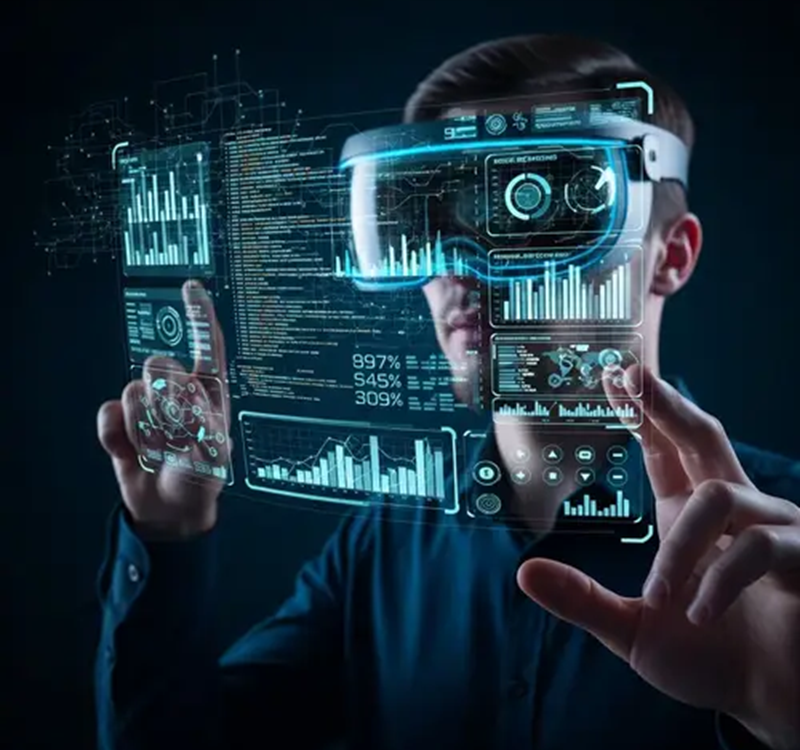
Hardware innovations would determine how the customization is delivered. Specialized augmented reality glasses could layer alternative faces over actors in real time. Smart televisions or streaming platforms could offer a toggle that re-renders selected characters through cloud-based processing. Personal computers and mobile devices might run local overlays for user-selected profiles. As processing speeds increase and latency decreases, the transformation could appear seamless.
Importantly, such systems would not merely swap faces. They would need to preserve emotional nuance, lighting consistency, and physical interactions. AI would have to adapt facial movements to match speech patterns and body language while maintaining realism. The result would be a dynamic form of “visual dubbing”—not changing the voice, but altering the visible identity of the performer.
Re-Imagining Cultural Representation
One of the most compelling arguments for this technology lies in cultural representation. For decades, representation in film and television has been a topic of debate. Audiences from underrepresented communities have often struggled to see themselves reflected in mainstream media. While the industry has made progress, disparities remain.
AI-enabled dynamic casting could empower viewers to re-imagine stories through lenses that resonate more personally. A young Hispanic viewer watching a fantasy epic could choose to see heroes who resemble their family and community. A Black viewer revisiting a classic romantic comedy might experience it anew with protagonists who reflect their own identity. The story remains unchanged, but the emotional connection deepens because the faces on screen mirror the viewer’s lived experience.
This personalization could foster a sense of belonging. Entertainment is not merely passive consumption; it shapes identity, aspirations, and perceptions of possibility. Seeing oneself represented—even in a personalized overlay—could reinforce confidence and cultural pride. For global audiences, it could bridge gaps between stories produced in one region and viewers in another.
Expanding Story Ownership
Beyond representation, this technology introduces a radical concept: shared authorship between creators and audiences. Traditionally, directors and casting agents make definitive choices about who embodies each role. Those decisions become canonical. With AI overlays, viewers gain a participatory role in shaping the visual presentation of a narrative.
This shift mirrors trends in interactive media and gaming, where players customize avatars and influence story outcomes. Now, even fixed narratives could feel adaptable. A viewer might watch a drama multiple times, each time with a different cultural configuration of characters. Such re-imagining does not erase the original work but creates parallel experiences.
In sports, the concept becomes even more intriguing. Imagine watching a historic NBA Finals game and overlaying players who resemble athletes from your local community. The statistics, plays, and commentary remain the same, but the visual identity changes. This could make sports archives more relatable across borders and demographics.
Impact on Ratings and Market Insights
From a business perspective, dynamic casting could profoundly influence ratings and audience analytics. Streaming platforms already gather detailed data on viewer preferences. Adding visual customization options would generate even richer insights. Which cultural configurations are selected most often? Do viewers gravitate toward casts that mirror their own identity, or do they prefer diverse ensembles? How do these choices correlate with watch time, repeat viewing, and subscription retention?
If viewers consistently choose certain overlays, studios might interpret that data as evidence of unmet demand. For instance, if a significant percentage of users opt to re-cast a show with a predominantly Hispanic ensemble, it signals a market appetite for original productions featuring Hispanic leads. Ratings could climb as personalization enhances engagement. Conversely, if viewers rarely alter certain shows, it might indicate satisfaction with existing representation.
Advertisers would also take interest. Customized overlays could align with targeted advertising strategies, presenting brands alongside culturally resonant imagery. However, this raises ethical considerations regarding data privacy and commercialization of identity.
Creative and Ethical Considerations
While the possibilities are expansive, they come with profound creative and ethical implications. Casting is an artistic decision intertwined with narrative meaning. Replacing actors—even visually—could alter thematic interpretations. A story about racial tension, for example, might lose context if its cast is homogenized.
Moreover, actors’ likenesses are intellectual property. Replacing them digitally raises questions about consent and compensation. Would performers need to license their facial data for modification? Would alternative “skins” require agreements with digital models whose features are used as overlays?
There is also the risk of cultural oversimplification. Identity is not merely skin tone or facial structure. Authentic representation involves lived experience, cultural nuance, and storytelling perspective. AI overlays might provide surface-level inclusion without addressing deeper structural inequities in content creation.
Another concern is fragmentation of shared cultural experiences. Part of the power of cinema lies in collective viewing—knowing that millions saw the same faces and performances. Personalized overlays could splinter that unity. Conversations about a film might diverge based on which version each person watched.
Empowerment Versus Escapism
An important philosophical dimension centers on whether dynamic casting empowers audiences or encourages escapism. On one hand, it can be empowering to see oneself reflected in any narrative. On the other, it might inadvertently sidestep the need for systemic change within the entertainment industry. If viewers can simply overlay representation onto existing content, studios might feel less pressure to diversify casting at the production level.
Ideally, the technology would function as a complement rather than a substitute for inclusive storytelling. It could serve as a testing ground—revealing through data which audiences crave certain representations—thereby motivating studios to invest in authentically diverse projects.
Case Studies in Re-Imagination
Consider iconic films such as Titanic. In its original release, the casting reflected specific creative choices by director James Cameron. Through AI overlays, viewers could experiment with different cultural interpretations of Jack and Rose. While the narrative arc remains unchanged, the social context of their romance might feel different depending on the chosen configuration.
Similarly, a long-running sitcom like Friends could be re-experienced with an entirely different cultural ensemble. Viewers might discover new layers of relatability or humor simply through visual transformation. In sports, re-imagining a legendary boxing match featuring Muhammad Ali with alternate visual identities would provoke fascinating discussions about the intersection of race, legacy, and athletic heroism.
These examples highlight both the transformative potential and the delicate balance required to respect historical authenticity.
Data-Driven Cultural Insight
Perhaps the most significant long-term impact lies in data. For the first time, studios could quantitatively measure how representation preferences vary across regions and demographics. Instead of relying solely on surveys and box office trends, they could observe real-time behavioral choices.
If viewers in Latin America consistently select Hispanic overlays for imported dramas, while viewers in Europe favor multicultural ensembles, producers gain actionable intelligence. This data could guide casting decisions, marketing campaigns, and international co-productions.
Moreover, insights might reveal unexpected cross-cultural affinities. Audiences might frequently choose overlays that do not match their own identity, suggesting curiosity and openness to diverse perspectives. Such findings could challenge assumptions about what “sells” and encourage more inclusive storytelling.
The Future of Personalized Media
As AI continues to evolve, the boundary between creator and consumer will blur further. Dynamic casting represents a step toward hyper-personalized entertainment, where stories adapt visually to each viewer. Combined with adaptive soundtracks, language translation, and interactive elements, the viewing experience could become deeply individualized.
Yet, this future demands thoughtful governance. Industry standards, ethical guidelines, and transparent consent frameworks will be essential. Cultural sensitivity must guide algorithm design. Audiences should understand when and how overlays are applied, and creators should retain the option to preserve canonical versions of their work.
Conclusion
AI-driven visual customization has the potential to reshape entertainment in profound ways. By allowing viewers to switch out on-screen identities through glasses, overlays, or streaming interfaces, it opens new pathways for representation, engagement, and cultural exploration. Individuals from all backgrounds could re-imagine stories and events with characters who look like them, deepening emotional connection and expanding inclusivity.
At the same time, the technology raises complex questions about artistic integrity, ethics, and shared cultural experience. Its impact on ratings and market insights could be transformative, revealing what audiences across cultures truly want to see. If implemented responsibly, dynamic casting could become a powerful tool—not to replace authentic representation, but to illuminate its importance and inspire a more inclusive future for global entertainment.
In the end, the promise of AI in this domain is not merely technical. It is cultural. It challenges us to reconsider who gets to see themselves as the hero, the romantic lead, the champion athlete—and how technology might help democratize that vision while preserving the artistry and humanity at the heart of storytelling.