
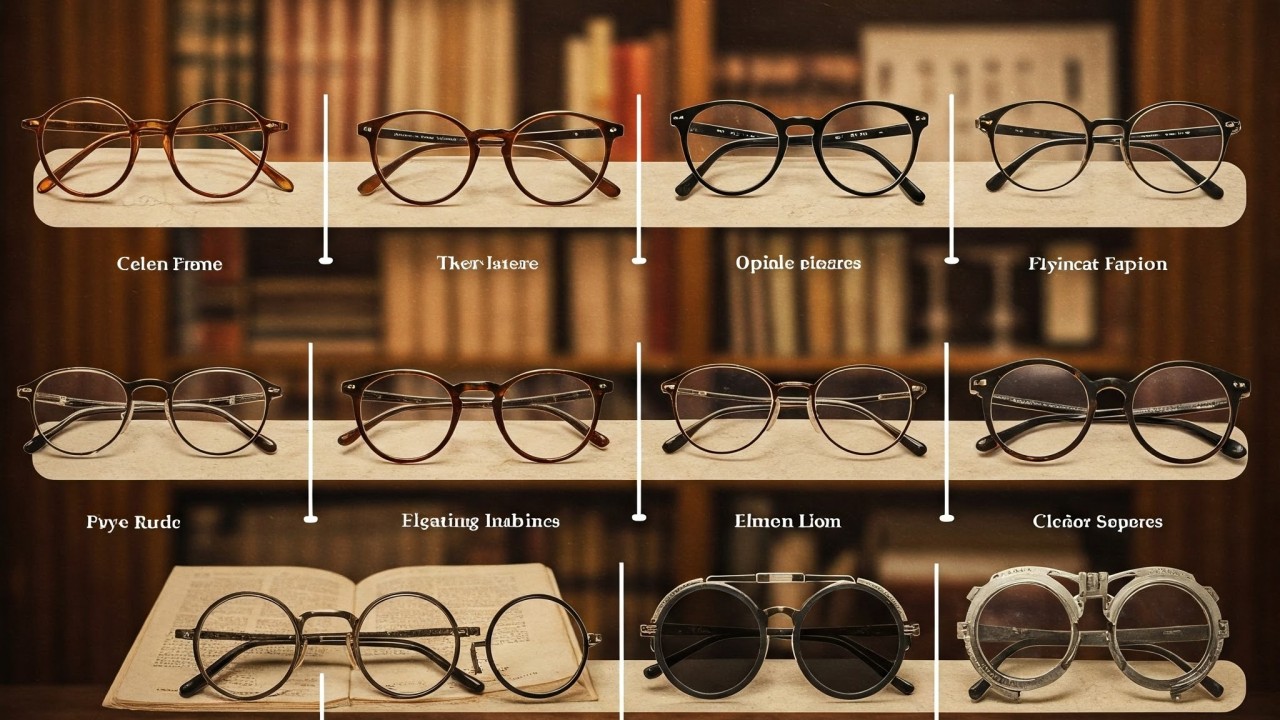
Eyewear is one of humanity’s most enduring and transformative inventions. What began as a rudimentary aid for aging scholars has evolved into a global industry blending medicine, fashion, engineering, and digital technology.
Today, glasses are not merely tools for correcting vision—they are expressions of identity, professional necessity, athletic equipment, and increasingly, wearable technology platforms.
The story of eyewear reflects advances in science, shifts in culture, and changing lifestyles. As visual demands continue to evolve in the digital age, so too does the technology that helps us see more clearly and comfortably.
The Origins of Eyewear
The earliest known eyeglasses date back to late 13th-century Italy. These early devices consisted of convex lenses mounted in simple frames designed to rest on the nose. They were primarily used to correct presbyopia—the age-related loss of near vision common among scholars and scribes.
For centuries, eyewear remained relatively crude and limited to the wealthy or educated classes. Frames were often made from wood, bone, or metal, and lenses were hand-ground with varying degrees of accuracy. The concept of individualized prescriptions was still developing, and optical science was in its infancy.
The 18th and 19th centuries brought significant refinement. Innovations such as side arms (temples) that hooked over the ears made glasses more stable and practical. Industrialization enabled more consistent lens production, while advances in optometry improved prescription accuracy.
By the 20th century, eyewear had become widespread, accessible, and medically standardized. Vision testing became routine, and eyeglasses transitioned from specialty items to everyday necessities.
From Medical Device to Fashion Statement
A major turning point in eyewear history was its transformation into a fashion accessory.
In the early 20th century, companies such as Ray-Ban popularized sunglasses, initially designed for U.S. military pilots. The Aviator style later became iconic, worn by celebrities and cultural figures. Soon, eyewear was no longer just corrective—it was aspirational.
Luxury brands such as Gucci and Prada entered the eyewear market, blending high fashion with optical functionality. Frames became bolder, lighter, more colorful, and more customizable.
By the late 20th century, eyewear had become part of personal branding. Thick black frames, rimless styles, oversized lenses, and geometric designs signaled intellectualism, professionalism, rebellion, or trend awareness. Glasses shifted from something people tried to hide to something they proudly displayed.
Technological Advances in Lenses
While frames evolved aesthetically, lens technology advanced scientifically.
Key innovations include:
- Bifocal and Progressive Lenses: Developed to address multiple vision needs within one lens, allowing smooth transition between near and distance vision.
- Anti-Reflective Coatings: Reduce glare, improve clarity, and enhance night driving visibility.
- Photochromic Lenses: Adjust automatically to light exposure, darkening outdoors and clearing indoors.
- High-Index Materials: Thinner, lighter lenses for stronger prescriptions.
- Blue Light Filtering: Designed to reduce digital eye strain caused by prolonged screen use.
Materials have shifted from heavy glass to lightweight plastics and polycarbonate, increasing comfort and safety. Impact-resistant lenses have become essential for children, athletes, and industrial workers.
Contact lenses also revolutionized vision correction. First introduced in practical soft form in the 1970s, they provided an alternative for those who disliked wearing glasses. Daily disposables and extended-wear options further increased convenience.
Eyewear and Lifestyle: Advantages and Disadvantages
Eyewear interacts differently with various lifestyles. Its benefits and drawbacks depend heavily on occupation, activity level, fashion preference, and health needs.
1. Professional and Academic Lifestyles
Advantages:
- Clear, precise correction enhances productivity.
- Glasses can project professionalism or intellectual credibility.
- Blue light filtering lenses may reduce digital fatigue for office workers.
Disadvantages:
- Extended screen exposure can still cause eye strain.
- Glasses may be uncomfortable during long workdays.
- Fogging (especially post-pandemic mask use) can be inconvenient.
For professionals, glasses are often practical and stylistic assets. However, many opt for contact lenses during presentations or physically active work.
2. Active and Athletic Lifestyles
Athletes face unique challenges.
Advantages of Sports Eyewear:
- Impact-resistant lenses protect against injury.
- UV protection is crucial for outdoor sports.
- Specialized tints enhance contrast and performance.
Disadvantages:
- Standard glasses can slip, fog, or break.
- Contact lenses may dry out during intense activity.
- Prescription sports eyewear can be expensive.
Specialized brands now design wraparound frames, ventilated lenses, and adjustable straps. Some athletes combine contact lenses with protective eyewear for optimal performance.
3. Children and Students
For children, vision correction is critical to academic development.
Advantages:
- Early correction improves learning outcomes.
- Durable polycarbonate lenses reduce injury risk.
Disadvantages:
- Glasses may break frequently.
- Social stigma can affect confidence.
- Rapid prescription changes require frequent updates.
Modern pediatric frames emphasize flexibility, comfort, and vibrant designs, helping children embrace rather than resist wearing glasses.
4. Fashion-Forward Lifestyles
Some individuals wear non-prescription glasses purely as accessories.
Advantages:
- Enhances personal style.
- Allows experimentation with trends.
- Non-prescription blue light lenses appeal to digital users.
Disadvantages:
- Poor-quality lenses may distort vision.
- Overreliance on aesthetics can overshadow optical health.
In fashion-centric environments, eyewear is as much about image as it is about function.
5. Aging Populations
As life expectancy increases, so does demand for multifocal solutions.
Advantages:
- Progressive lenses eliminate need for multiple pairs.
- Anti-glare coatings improve night driving safety.
Disadvantages:
- Adaptation period for progressive lenses.
- Higher costs for premium lens features.
For seniors, eyewear directly affects independence and safety, influencing everything from reading medication labels to navigating stairs.
Health Considerations and Limitations
Eyewear corrects refractive errors but does not cure underlying conditions. Myopia, hyperopia, astigmatism, and presbyopia require ongoing management.
Some disadvantages include:
- Dependency: Many cannot function without glasses or contacts.
- Maintenance: Cleaning, replacing, and protecting eyewear requires diligence.
- Cost: High-quality lenses and designer frames can be expensive.
- Discomfort: Ill-fitting frames cause pressure points and headaches.
Contact lenses carry additional risks, including infection if not properly maintained.
Laser vision correction procedures have reduced dependence for some individuals, but surgery is not suitable for everyone and carries its own risks.
The Digital Era and Eye Strain
The 21st century has introduced unprecedented visual demands. Average screen time has soared, contributing to digital eye strain—characterized by dryness, headaches, blurred vision, and fatigue.
Eyewear manufacturers have responded with:
- Blue light filtering coatings
- Anti-fatigue lenses
- Ergonomically optimized progressive designs
While debate continues over the long-term impact of blue light exposure, demand for digital-friendly lenses continues to grow.
Smart Glasses and Wearable Technology
The next frontier of eyewear merges optics with computing.
Companies such as Meta Platforms and Google have explored smart glasses capable of integrating cameras, augmented reality (AR), and voice control. Early versions faced privacy concerns and limited adoption, but rapid advances in micro-displays and battery efficiency are improving feasibility.
Smart eyewear applications include:
- Navigation overlays
- Real-time translation
- Health monitoring
- Augmented workspace interfaces
- Accessibility support for visually impaired users
As augmented reality matures, eyewear may become a primary interface for digital interaction.
Sustainability and Material Innovation
Environmental awareness is influencing eyewear production.
Manufacturers are experimenting with:
- Biodegradable acetate frames
- Recycled ocean plastics
- 3D-printed customizable frames
- Reduced packaging waste
Customization technology allows consumers to scan their face digitally and receive perfectly fitted frames, reducing returns and material waste.
The Future of Vision Correction
Looking ahead, several trends are poised to redefine eyewear:
1. Adaptive Focus Lenses
Electrically adjustable lenses that change focus dynamically could eliminate the need for multifocals. Early prototypes use liquid crystal or fluid-based technology to adjust refractive power in real time.
2. Myopia Control
With global myopia rates rising dramatically, especially among children, lenses designed to slow progression are gaining traction. Specialized contact lenses and spectacle designs aim to reshape peripheral focus to reduce elongation of the eye.
3. AI-Enhanced Diagnostics
Integrated sensors in frames could monitor eye health, detect early signs of glaucoma, or track biometric data. Combined with artificial intelligence, eyewear may become a preventative healthcare device.
4. Seamless AR Integration
Future smart glasses may be indistinguishable from traditional frames, offering immersive yet subtle augmented overlays without bulky hardware.
5. Lightweight and Stronger Materials
Graphene composites and advanced polymers could produce ultra-light frames with enhanced durability.
Balancing Technology and Humanity
As eyewear evolves, designers face a delicate balance: integrating advanced technology while maintaining comfort, aesthetics, and social acceptability.
The more seamlessly technology integrates into familiar eyewear forms, the more likely adoption will grow. Consumers tend to prefer subtle innovation over conspicuous gadgets.
Conclusion
From handcrafted medieval lenses to AI-powered smart glasses, eyewear has undergone extraordinary transformation. It has shifted from a niche medical aid to a global cultural and technological phenomenon.
Eyewear enhances productivity, safety, style, and quality of life across diverse lifestyles. Yet it also presents challenges—cost, maintenance, adaptation, and physical limitations.
The future promises adaptive lenses, smart integration, sustainable materials, and preventative health monitoring. As visual demands continue to expand in a screen-saturated world, eyewear will remain not only a corrective tool but a platform for innovation.
Ultimately, eyewear reflects both who we are and how we see the world—literally and metaphorically. Its evolution mirrors our scientific progress, cultural shifts, and relentless pursuit of clearer vision in every sense of the word.