
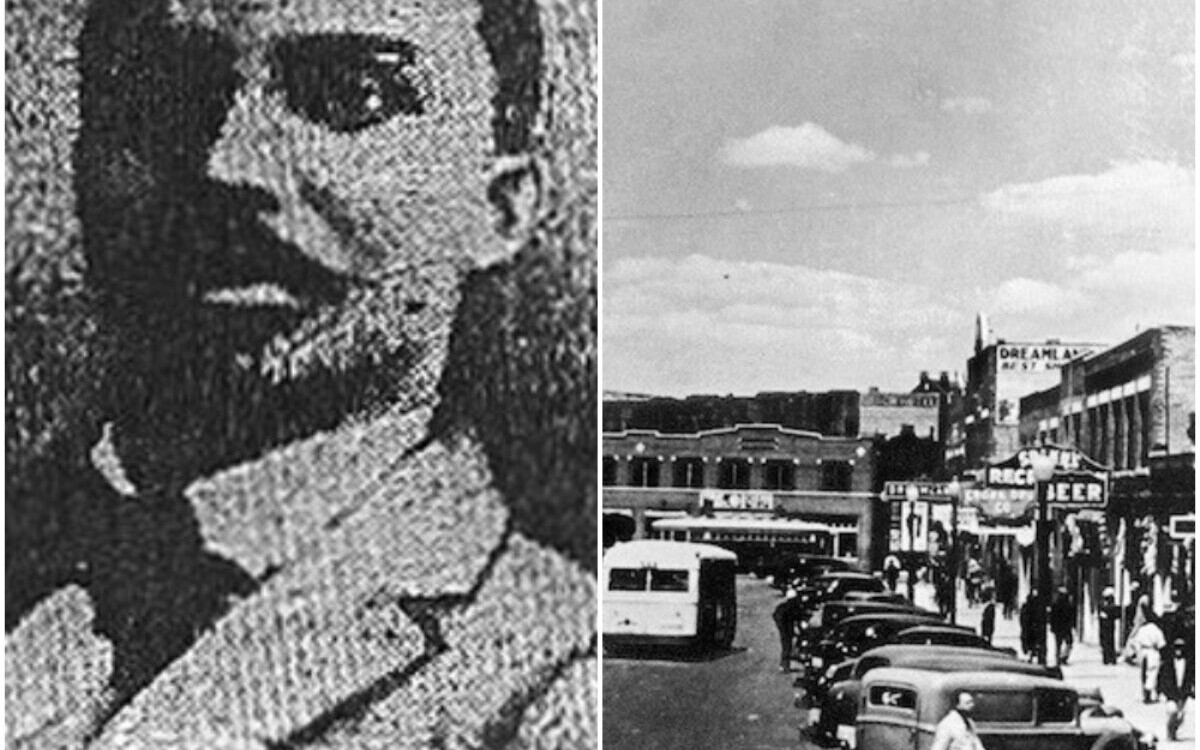
The story of O. W. Gurley is one of vision, self-determination, and economic strategy in the face of systemic racial oppression. As one of the principal founders of Tulsa’s Greenwood District—later known as “Black Wall Street”—Gurley played a pivotal role in building one of the most prosperous Black communities in early twentieth-century America. His path to success was shaped by discipline, strategic land ownership, institution-building, and resilience against racial hostility. Understanding his early life, growth, development, and the hurdles he endured reveals not only the story of an entrepreneur but of a nation grappling with race, opportunity, and power.
Early Life and Post–Civil War America
O.W. Gurley was born shortly after the Civil War in 1868. His parents had been enslaved, and his early life unfolded during Reconstruction—a brief period when newly freed African Americans sought economic independence and civic participation. Reconstruction, however, was marked by instability, violent backlash, and the eventual imposition of Jim Crow laws across the South.
Growing up in this volatile environment meant opportunity was limited and fragile. African Americans were technically free, but they faced barriers to land ownership, education, and political representation. Gurley came of age during a time when Black ambition was often met with hostility.
He received an education—an achievement in itself given the systemic underfunding of Black schools. Education became the foundation for his upward mobility. He later worked as a teacher in Arkansas, one of the few professional roles accessible to Black men in that era. Teaching provided income, community standing, and leadership experience.
Yet Gurley did not intend to remain confined by the narrow economic boundaries placed before him.
Migration and Entrepreneurial Awakening
Like many African Americans in the late nineteenth century, Gurley sought better prospects beyond the Deep South. The Oklahoma Territory presented opportunity. Following the Land Runs of the 1890s, Oklahoma became a frontier of possibility, particularly for Black settlers who hoped to build autonomous communities.
Gurley relocated to what would become Tulsa around 1905. At that time, Tulsa was growing rapidly due to oil discoveries. Economic expansion created openings for land acquisition and business development. Gurley recognized that land ownership was the gateway to generational wealth and economic control.
One of the defining decisions of his life was purchasing 40 acres of land near the Frisco railroad tracks. This area would later form the heart of the Greenwood District. Crucially, Gurley made a strategic choice: he sold parcels of his land exclusively to Black buyers.
This decision was both economic and ideological. By concentrating land ownership within the Black community, Gurley laid the groundwork for collective prosperity. In an era of segregation and exclusion, he created a space where African Americans could build businesses, schools, and churches free from direct white ownership control.
Building Greenwood: Vision in Action
Greenwood quickly became a thriving commercial district. Gurley himself established a rooming house for Black railroad workers and later operated grocery stores and other ventures. His investments catalyzed further development. Entrepreneurs opened banks, law offices, medical practices, hotels, theaters, and retail shops.
Greenwood’s growth was fueled by segregation itself. Because Black residents were barred from patronizing many white-owned establishments, money circulated within the community. This internal economic ecosystem strengthened local institutions.
Gurley’s leadership extended beyond property ownership. He was known as a community organizer and civic participant. He helped establish institutions that supported education and political engagement. His ability to combine entrepreneurship with institution-building distinguished him from many contemporaries.
However, prosperity did not eliminate racial hostility. The very success of Greenwood became a source of resentment among some white residents of Tulsa.
Hurdles of Jim Crow and Racial Violence
Operating a Black economic hub in early twentieth-century Oklahoma required constant navigation of systemic racism. Jim Crow laws enforced segregation, limited civil rights, and sanctioned discriminatory practices.
Black entrepreneurs faced restricted access to capital, discriminatory insurance practices, and legal vulnerabilities. Gurley and his peers relied heavily on self-financing and community-based credit systems. Access to white-controlled banking institutions was limited.
Despite these structural hurdles, Greenwood flourished. By 1921, it was often referred to as “Black Wall Street,” symbolizing its concentration of wealth and enterprise.
Yet the greatest hurdle came in the form of catastrophic racial violence.
The Tulsa Race Massacre
In May and June of 1921, racial tensions erupted into one of the most devastating acts of domestic terrorism in American history: the Tulsa Race Massacre.
Following an unfounded accusation against a young Black man, white mobs descended upon Greenwood. Over the course of roughly 24 hours, homes and businesses were looted and burned. Airplanes reportedly dropped incendiary devices. An estimated 35 square blocks were destroyed. Hundreds of Black residents were killed, and thousands were left homeless.
For O.W. Gurley, the massacre represented not just personal loss but an assault on everything he had built. Much of his property was destroyed. The economic infrastructure painstakingly constructed over 15 years was reduced to ashes.
This moment was the ultimate hurdle—an attempt to erase Black prosperity through violence.
Resilience After Devastation
The aftermath of the massacre revealed both systemic injustice and extraordinary resilience. Insurance companies refused to pay claims, citing riot exclusions. City officials attempted to rezone Greenwood in ways that would prevent rebuilding.
Yet Gurley and other community leaders fought back. They resisted rezoning efforts and began reconstruction almost immediately. Tents and temporary structures housed displaced residents.
Churches became coordination centers. Within a few years, dozens of businesses reopened.
Although Gurley’s personal financial standing suffered significantly, he remained involved in rebuilding efforts. His earlier emphasis on land ownership proved critical. Because many Black residents owned their property outright, they had a foundation for reconstruction.
The recovery was not complete restitution—many families never regained what they had lost—but Greenwood reemerged as a symbol of perseverance.
Later Years and Legacy
After the massacre, Gurley eventually left Tulsa and relocated to Los Angeles. He continued investing in property and community initiatives. Though he never fully recovered the scale of wealth he had achieved before 1921, his entrepreneurial spirit endured.
He died in 1935, decades before broader recognition of Greenwood’s significance entered mainstream historical discourse. For many years, the Tulsa Race Massacre was omitted from textbooks and public memory.
In recent decades, renewed scholarship and public acknowledgment have restored attention to Gurley’s contributions. His life stands as testimony to the power of economic self-determination and collective strategy.
Path to Success: Key Principles
O.W. Gurley’s growth and development reflect several enduring principles:
1. Strategic Land Ownership:
He understood that property was power. By acquiring land and controlling its distribution, he shaped an entire economic district.
2. Community-Centered Capitalism:
Rather than individual accumulation alone, Gurley prioritized communal uplift. Restricting sales to Black buyers fostered internal economic circulation.
3. Institutional Development:
He invested in infrastructure—housing, retail, and civic institutions—that sustained long-term growth.
4. Courage Amid Hostility:
Operating in a racially segregated society required constant navigation of legal and social barriers.
5. Resilience in Catastrophe:
After the massacre, rebuilding efforts demonstrated extraordinary determination.
Conclusion
O.W. Gurley’s life encapsulates both the promise and peril of Black entrepreneurship in early twentieth-century America. From the son of formerly enslaved parents to a founder of one of the most prosperous Black communities in U.S. history, his path was defined by vision and strategy.
The hurdles he endured—systemic racism, financial exclusion, and ultimately violent destruction—were immense. Yet his emphasis on ownership, organization, and community empowerment created a legacy that continues to inspire.
Greenwood’s rise and destruction remain stark reminders of how fragile progress can be in the face of injustice. At the same time, Gurley’s story affirms the enduring strength of collective ambition and disciplined enterprise. His life stands as a testament not only to what was built, but to the resilience required to build it at all.