
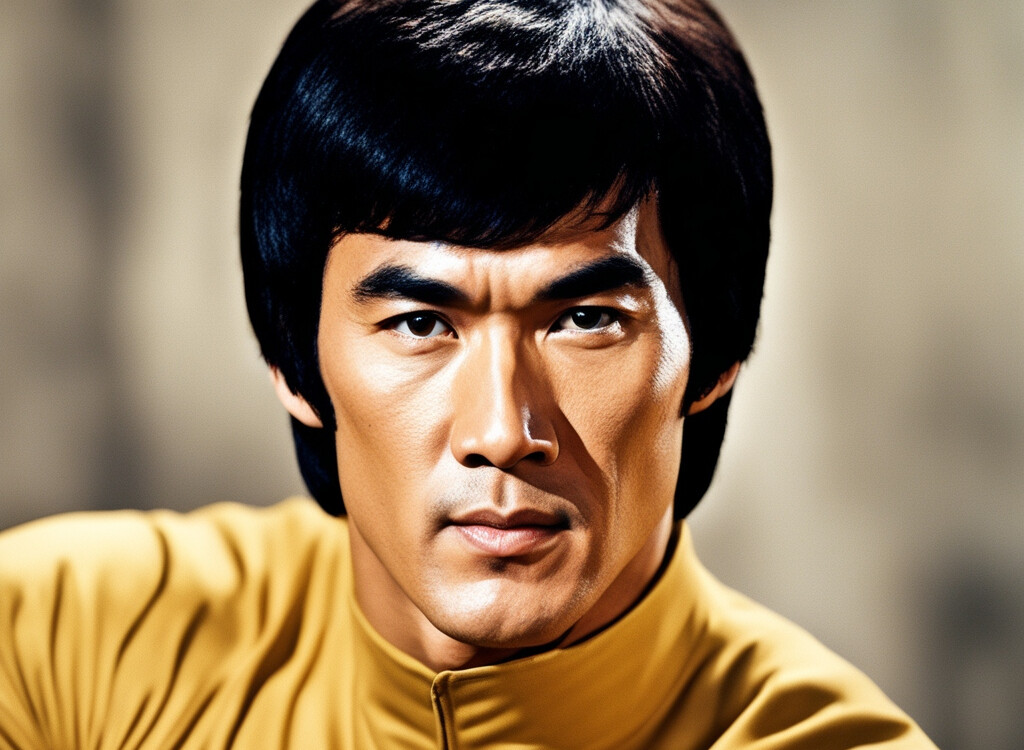
Artificial intelligence is evolving at a breathtaking pace. New models reason more effectively, generate video and music, design drugs, write code, and even act autonomously. But to truly understand this wave of innovation, it helps to look beyond engineering and into philosophy. The martial arts philosophy of Bruce Lee offers a surprisingly powerful framework for understanding where AI is heading — and where it should go.
Bruce Lee was not just a martial artist. He was a systems thinker. He questioned rigid traditions, rejected unnecessary forms, and created a philosophy — Jeet Kune Do — built on adaptability, efficiency, and directness. Today’s most important AI innovations mirror those same principles.
“Using No Way as Way” — The Rise of Adaptive AI
Bruce Lee famously said, “Using no way as way; having no limitation as limitation.” He rejected fixed martial arts styles in favor of fluid adaptability. Similarly, early AI systems were rigid and single-purpose. A model did one thing: classify images, translate text, recommend products. Each system had a defined “style.”
Modern AI has moved beyond that rigidity.
Large foundation models like OpenAI’s GPT systems, Google DeepMind’s Gemini, and Anthropic’s Claude are built to adapt across tasks. They are not trained for one narrow application; they are general systems capable of reasoning, coding, planning, analyzing images, and more.
This shift toward foundation models reflects Lee’s philosophy. Instead of memorizing rigid sequences (like old rule-based AI systems), these models internalize patterns from massive datasets and respond fluidly to new situations. They don’t follow a strict “form” — they generate responses dynamically based on context.
The innovation here isn’t just scale. It’s adaptability.
“Be Like Water” — Multimodal Intelligence
“Empty your mind. Be formless, shapeless, like water.”
Water adapts to any container. It can flow or crash. This metaphor perfectly captures multimodal AI — one of the most significant innovations in recent years.
Earlier AI systems were modality-bound. Vision models processed images. Language models processed text. Speech systems handled audio. Each was separate.
Today’s systems integrate modalities into unified models. GPT-4-level systems, Gemini, and other frontier architectures process text, images, audio, and increasingly video — in one architecture.
This is more than convenience. It mirrors how humans perceive reality: not as isolated data streams, but as integrated experience.
Multimodal AI enables:
- Real-time image analysis combined with natural language reasoning
- Voice-driven assistants that understand context visually
- Video generation from textual prompts
- Robotics systems that perceive and act using combined sensory input
Like water taking the shape of its container, AI systems now reshape themselves to match the input environment. They do not change identity; they change expression.
That flexibility is innovation at the architectural level.
“Absorb What Is Useful” — Transfer Learning and Fine-Tuning
Bruce Lee did not discard traditional martial arts entirely. He absorbed what worked and discarded what didn’t. This philosophy directly parallels transfer learning.
Modern AI models are pre-trained on massive datasets and then fine-tuned for specific tasks. Instead of building a new model from scratch, developers adapt a general intelligence core.
For example:
- Medical AI systems fine-tune foundation models on healthcare data
- Legal AI systems adapt models to case law
- Coding assistants specialize on programming corpora
This layered learning approach dramatically reduces cost and increases performance. It reflects an important innovation: AI is no longer built monolithically. It evolves modularly.
Bruce Lee’s method teaches efficiency. Don’t reinvent what already works. Adapt it. AI innovation now thrives on this principle.
“Simplicity Is the Key” — Model Compression and Efficiency
One of the paradoxes of AI innovation is that while models grow larger, research is equally focused on making them smaller and more efficient.
Bruce Lee valued directness. He eliminated ornamental movement. In AI, similar principles drive innovation in:
- Model distillation (compressing large models into smaller ones)
- Quantization (reducing numerical precision to save computation)
- Edge AI (running models on devices instead of the cloud)
- Sparse architectures (activating only parts of the network at a time)
The result is AI that can run on smartphones, embedded systems, and even wearable devices.
Efficiency is not just technical optimization. It’s philosophical refinement. Remove excess. Keep essence.
Lee would likely argue that a bloated, inefficient system is like a martial artist performing unnecessary movements — impressive, perhaps, but not effective.
“Intercepting Fist” — Real-Time AI Agents
Jeet Kune Do translates loosely to “The Way of the Intercepting Fist.” Instead of waiting to react, Bruce Lee emphasized intercepting attacks mid-motion.
AI is entering its “interception” era through autonomous agents.
Unlike passive chatbots, AI agents can:
- Execute multi-step plans
- Interact with software tools
- Browse the web
- Write and execute code
- Manage workflows
These systems anticipate user needs, break down goals, and act in structured steps.
Agentic AI represents a major innovation: systems moving from reactive response to proactive execution.
This parallels Lee’s philosophy of timing. The most powerful action happens not after an event, but during it.
“Emotional Content” — AI and Human Alignment
Bruce Lee believed that martial arts without emotional content were empty. Technique alone was not enough; expression mattered.
AI faces a similar challenge.
Raw capability — generating text, solving equations, synthesizing images — is not sufficient.
Systems must align with human values. They must understand nuance, ethics, and intent.
Recent innovations focus heavily on alignment:
- Reinforcement learning from human feedback (RLHF)
- Constitutional AI
- Safety fine-tuning
- Guardrails for misuse prevention
Organizations like Anthropic emphasize AI systems that are helpful, honest, and harmless.
This alignment work is not peripheral; it is central to AI’s future. Without it, capability becomes dangerous.
Lee insisted that martial arts were ultimately about self-knowledge and control. Similarly, AI development increasingly recognizes that power without restraint is incomplete.
“The Art of Expressing the Human Body” — Generative AI Creativity
Bruce Lee described martial arts as an art of expressing the human body. AI innovation in generative systems mirrors this idea — machines expressing patterns learned from humanity.
Systems now generate:
- Hyper-realistic images
- Cinematic video
- Music compositions
- Novel design prototypes
- Entire software applications
Companies like OpenAI, Stability AI, and Runway are pushing the boundaries of creative AI.
Yet generative AI raises philosophical questions: Is this expression authentic? Is it derivative? Is it collaborative?
Bruce Lee might argue that expression is not about origin, but about integration. AI recombines human knowledge in new ways. It reflects humanity back at itself — like a mirror in motion.
The innovation lies not merely in output quality, but in co-creation. AI becomes a partner in expression.
“To Know Oneself” — AI Interpretability and Transparency
A martial artist must understand their strengths and weaknesses. Similarly, AI systems must become more interpretable.
As models grow more complex, understanding how they reach conclusions becomes harder. Innovations in interpretability aim to:
- Map neuron activations
- Identify internal concept representations
- Detect bias and hallucination patterns
- Increase transparency in decision-making
Without interpretability, AI is a black box — powerful but opaque.
Bruce Lee emphasized self-awareness. AI development increasingly echoes this through research into explainable AI (XAI). Systems must not only produce answers but also justify them.
Flow, Not Force — The Future of AI
Perhaps the most profound connection between Bruce Lee’s philosophy and AI innovation is the idea of flow.
AI is moving toward:
- Continuous learning systems
- Real-time adaptation
- Personalized intelligence
- Seamless human-AI collaboration
The rigid boundaries between tools are dissolving. AI systems integrate into workflows, devices, and creative processes.
The goal is not domination of tasks, but augmentation of human capability.
Bruce Lee did not create Jeet Kune Do to dominate opponents through brute force. He designed it to harmonize efficiency, adaptability, and expression.
Similarly, the most meaningful AI innovations are not about raw computational scale. They are about:
- Adaptability over rigidity
- Efficiency over excess
- Alignment over chaos
- Collaboration over replacement
In this light, AI development resembles martial philosophy. It evolves through experimentation, discarding what fails and refining what works.
To understand modern AI, we don’t just need technical knowledge. We need a framework for thinking about power, flexibility, and restraint.
Bruce Lee offered one decades ago.
“Be water, my friend.”
As AI continues to evolve — from multimodal systems to autonomous agents to aligned general intelligence — the question is not simply how powerful it will become.
The deeper question is whether it will flow wisely.