
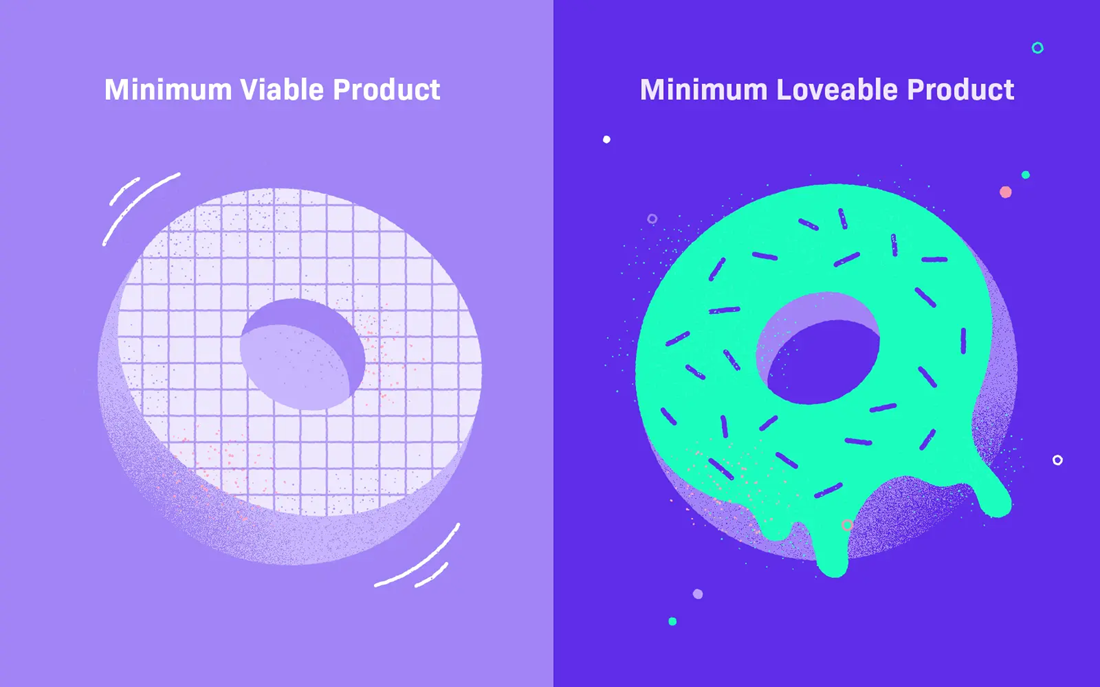
For more than a decade, the startup world revolved around the idea of the Minimum Viable Product (MVP). The concept, popularized by entrepreneur and author Eric Ries in the book The Lean Startup, encouraged founders to release the simplest version of a product that could validate an idea. The goal was speed: build quickly, test quickly, and iterate based on user feedback. In theory, this approach reduced wasted effort and helped teams learn what customers truly wanted.
But as technology ecosystems matured and competition intensified, a shift began to emerge. Many founders realized that simply being “viable” was no longer enough. In crowded markets, users had countless alternatives, and they rarely felt compelled to adopt products that were merely functional. Instead, the products that gained traction were those that created emotional connection, delight, or clear value from the very first interaction.
This shift has given rise to the idea of the Minimum Lovable Product (MLP)—a product that may still be simple, but is designed to be genuinely meaningful and enjoyable for users. Rather than asking, “What is the least we can build?” teams ask, “What is the smallest experience people will love?”
The emergence of the MLP mindset reflects deeper changes in technology, consumer expectations, and the tools available to founders. It also represents a new philosophy for how companies design, launch, and grow products in the modern digital economy.
The Origins of the MVP Mindset
To understand the rise of the Minimum Lovable Product, it helps to revisit the original MVP philosophy. During the early 2000s and 2010s, the startup ecosystem was shaped by rapid technological experimentation and limited access to capital. Entrepreneurs needed efficient ways to test ideas before investing heavily in development.
The MVP framework provided a solution. Instead of building a fully featured product, startups could release a basic prototype and learn from real users. If the concept resonated, they would iterate. If it failed, they would pivot to a new idea.
Companies such as Dropbox famously used simple demonstrations or early prototypes to validate demand before building complex systems. The emphasis was on learning through experimentation rather than perfect execution.
For many startups, this approach worked remarkably well. It reduced risk and allowed small teams to compete with larger organizations. However, the strategy also produced unintended consequences.
The Problem with “Barely Good Enough”
As MVP thinking spread, some teams began interpreting it too literally. Instead of focusing on learning, they optimized for releasing the absolute minimum functionality possible.
The result was a flood of products that technically worked but lacked polish, emotional resonance, or clear value. Users encountered buggy interfaces, confusing workflows, and incomplete experiences.
In an earlier era, consumers might have tolerated such imperfections. But as digital experiences improved across the industry—driven by companies like Apple and Airbnb—user expectations rose dramatically.
People became accustomed to products that were intuitive, beautiful, and thoughtfully designed. In comparison, many MVP-style launches felt unfinished or uninspiring.
This created a key realization among product teams: users rarely fall in love with “viable.”
Defining the Minimum Lovable Product
The Minimum Lovable Product concept emerged as a response to this gap. Instead of prioritizing minimal functionality alone, MLP thinking emphasizes delivering a core experience that users genuinely enjoy.
A Minimum Lovable Product has several defining characteristics:
It solves a real problem. Like an MVP, an MLP addresses a meaningful user need.
It delivers a complete core experience. Even if features are limited, the main workflow feels coherent and satisfying.
It creates emotional resonance. The product includes elements—design, tone, performance, or surprise—that make users feel something positive.
It encourages repeat use. Users return because the experience is enjoyable, not just functional.
In short, the MLP approach focuses on depth over breadth. Instead of launching many half-built features, teams craft a small number of interactions that feel delightful and purposeful.
Why the Shift Is Happening Now
Several technological and cultural trends are accelerating the transition from MVP to MLP thinking.
Rising User Expectations
The modern consumer interacts with sophisticated digital products every day. Applications from companies like Apple, Spotify, and Notion Labs have set high standards for usability and design.
When users try a new product, they unconsciously compare it to these polished experiences. If the product feels clunky or unfinished, they often abandon it quickly.
This reality forces startups to deliver higher-quality first impressions.
Saturated Markets
Many software categories are now crowded with competitors. Productivity tools, social platforms, e-commerce apps, and fintech services often have dozens—or hundreds—of alternatives.
In such environments, functional parity is common. What differentiates products is often the experience itself.
A lovable product stands out not just because of what it does, but how it makes users feel.
The Power of Word of Mouth
Products that create emotional connections tend to spread organically. Users recommend them to friends, share them online, and become enthusiastic advocates.
Companies like Figma and Slack benefited enormously from this dynamic. Early users didn’t just tolerate these tools—they loved them.
This organic enthusiasm can accelerate growth far more effectively than paid marketing alone.
Design as a Strategic Advantage
The Minimum Lovable Product era places design at the center of product strategy.
Historically, design was sometimes treated as a finishing layer applied after core functionality was built. In the MLP model, design shapes the product from the beginning.
This includes:
• User experience design, ensuring workflows are intuitive
• Visual design, creating aesthetic appeal and brand identity
• Interaction design, making the product feel responsive and alive
• Emotional design, crafting moments of delight or surprise
Companies that excel at these dimensions often build stronger user relationships and higher retention.
This explains why many successful startups invest heavily in design talent from the earliest stages.
Focus: The Hidden Superpower
One of the most important principles behind the MLP approach is focus.
Instead of attempting to build a comprehensive platform immediately, teams concentrate on a single use case and execute it exceptionally well.
Consider the early versions of companies like Instagram. The product initially focused almost entirely on photo sharing with filters. It did not attempt to replicate every feature of other social networks.
However, the experience of capturing, editing, and sharing images felt seamless and fun. That clarity of purpose made the product compelling.
By focusing intensely on a narrow problem, teams can refine every detail of the user experience.
The Emotional Dimension of Products
The word “lovable” might sound subjective, but it reflects an important truth: human decisions are influenced by emotion.
People choose products not only because they work but because they feel good to use.
This emotional connection can arise from many sources:
• Elegant design
• Playful interactions
• Clear value delivered quickly
• A sense of empowerment or creativity
• Community and shared identity
When products evoke these feelings, users form deeper attachments. They become loyal customers rather than casual users.
In the MLP era, emotional engagement becomes a strategic advantage.
AI and the Lovable Product
Artificial intelligence is further accelerating the transition toward Minimum Lovable Products.
Tools from companies like OpenAI and Anthropic allow teams to build sophisticated features—such as natural language interfaces, personalization, and automation—much more quickly.
However, AI capabilities alone rarely create differentiation. Many teams can access similar models and APIs.
What matters is how those capabilities are integrated into the user experience.
A lovable AI product does not simply showcase technology. It solves problems in ways that feel intuitive, helpful, and even magical.
For example, intelligent systems that anticipate needs or simplify complex tasks can create moments of delight that strengthen user loyalty.
Balancing Speed and Craft
One common concern about the Minimum Lovable Product philosophy is that it might slow down development. After all, crafting delightful experiences requires time and attention to detail.
However, the goal is not perfection—it is intentional simplicity.
Teams still move quickly, but they prioritize the aspects of the product that matter most to users.
Rather than building ten mediocre features, they build one excellent experience.
This approach often leads to stronger early traction, which can justify further investment and development.
Metrics for Lovability
If the goal is to build something users love, how can teams measure success?
Several metrics provide clues:
User retention. Do people continue using the product over time?
Organic growth. Are users recommending the product to others?
Engagement. How frequently and deeply do users interact with the product?
Net Promoter Score (NPS). Are customers enthusiastic enough to promote the product?
These indicators often reveal whether a product has moved beyond mere viability into genuine user affection.
Challenges of the MLP Approach
While the Minimum Lovable Product philosophy offers many advantages, it also presents challenges.
Subjectivity. Determining what users will love can be difficult without extensive testing and feedback.
Resource constraints. Early-stage startups must balance quality with limited time and funding.
Overdesign risk. Teams may spend too much time perfecting details before validating demand.
Successful organizations navigate these tensions by combining thoughtful design with continuous experimentation.
The Cultural Shift Inside Companies
Adopting the MLP mindset often requires cultural changes within organizations.
Teams must collaborate across disciplines—engineering, design, product management, and marketing—to craft cohesive experiences.
Leadership must also embrace the idea that emotional resonance is not superficial. It is a core driver of adoption and loyalty.
Companies that treat design and user experience as strategic priorities tend to produce more lovable products.
Looking Ahead
As technology continues to evolve, the expectations placed on digital products will likely increase even further.
Users will expect systems that are not only powerful but also intuitive, personalized, and enjoyable. Advances in AI, interface design, and computing platforms will expand what is possible—but they will also raise the bar for what feels impressive.
In this environment, the companies that succeed will be those that combine technical capability with deep empathy for users.
The Minimum Lovable Product framework provides a useful lens for achieving this balance. It encourages teams to build quickly while still respecting the emotional and experiential dimensions of product design.
Rather than launching something that merely works, founders aim to launch something that matters.
Conclusion
The transition from Minimum Viable Product to Minimum Lovable Product reflects a broader evolution in the technology industry.
Early startups focused on speed and validation. Today’s teams must also compete on experience, design, and emotional engagement.
This does not mean abandoning the principles of experimentation and iteration championed by thinkers like Eric Ries. Instead, it means applying those principles while recognizing that users gravitate toward products that inspire enthusiasm, not just acceptance.
In crowded markets with sophisticated consumers, the difference between success and obscurity often comes down to whether people simply use a product—or truly love it.
The Minimum Lovable Product era challenges founders to build with empathy, intention, and creativity. By focusing on the smallest experience capable of delighting users, teams can create products that spread organically, build loyal communities, and ultimately reshape industries.
In a world overflowing with software, lovability may be the most powerful competitive advantage of all.