
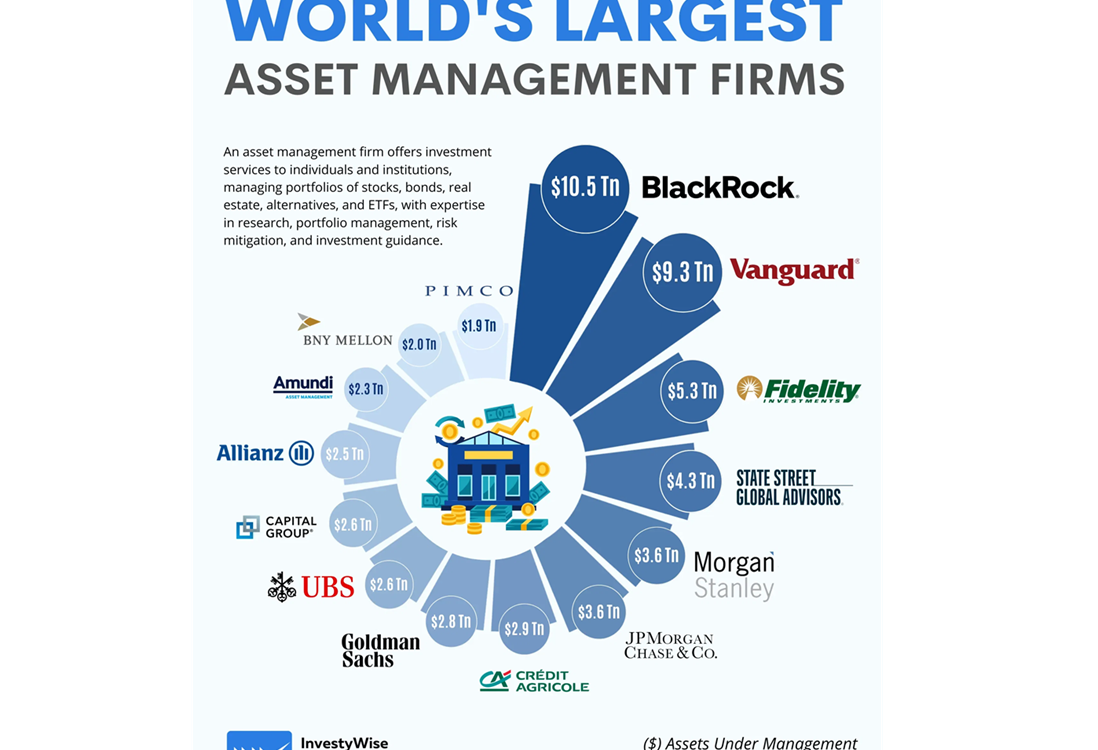
In the world of global finance, three firms quietly dominate the investment landscape: BlackRock, Vanguard, and State Street. Collectively, they manage trillions of dollars in assets, and their rivalry has reshaped everything from index funds to exchange-traded funds (ETFs), corporate governance, and the adoption of technology in investing.
The Clash of Titans
Each firm has its own approach and philosophy:
- BlackRock
- The world’s largest asset manager, known for its technology-driven approach through the Aladdin risk management platform.
- Focused on active and passive investing, and increasingly on sustainable finance.
- Vanguard
- Pioneered low-cost index investing and the mutual fund revolution.
- Strong emphasis on long-term investing and client alignment through its unique ownership structure (investors own Vanguard).
- State Street Global Advisors
- Known for innovative ETFs (including the SPDR “Spider” series) and index fund management.
- Focuses on governance, ESG (environmental, social, and governance) investing, and technology adoption.
The rivalry among them isn’t just about who manages the most assets; it’s about winning the trust of investors, influencing markets, and leading innovation.
Innovation as a Competitive Edge
Over the past two decades, these firms have continuously pushed each other to innovate:
- Index and ETFs:
- Vanguard popularized low-cost index funds.
- State Street created SPDR ETFs, bringing index investing to mainstream markets.
- BlackRock followed with iShares, building a massive ETF ecosystem.
- Technology and Analytics:
- BlackRock’s Aladdin platform is now a global standard for portfolio management and risk assessment, used internally and licensed externally.
- Vanguard and State Street developed their own platforms for portfolio analytics and operational efficiency, driving cost reductions and transparency.
- Sustainable and ESG Investing:
- BlackRock publicly pushed for climate-conscious investing, influencing corporate behavior.
- Vanguard and State Street also expanded ESG offerings, competing for assets while lobbying for sustainable disclosure standards.
Why the Rivalry Matters
The competition between these firms has shaped modern finance:
- Investor benefits: Lower costs, wider ETF selections, and better technology for portfolio management.
- Corporate influence: Their massive holdings give them significant voting power in boards and governance.
- Market innovation: The push for ETFs, ESG integration, and AI-driven analytics accelerates industry-wide adoption.
Yet, the rivalry also raises questions about concentration of power. With trillions under management, these three firms collectively own large stakes in nearly every public company, giving them unprecedented influence over markets and corporate decisions.
The Role of AI and the Future
Artificial intelligence is likely to reshape this rivalry further:
- Predictive analytics: AI can help identify market trends, optimize portfolios, and manage risk in real time.
- Automation: Trading, reporting, and client communication can be streamlined, reducing costs and improving accuracy.
- Sustainability insights: AI can track ESG metrics more comprehensively, helping investors make informed decisions faster.
Firms that adopt AI effectively may gain a decisive competitive edge, intensifying the rivalry while continuing to innovate on fees, products, and market influence.
In Conclusion
The rivalry between BlackRock, Vanguard, and State Street is less about headlines and more about influence, innovation, and adaptation. Their competition has lowered costs, increased transparency, and shaped how investors approach the market.
But as AI, ESG investing, and digital platforms become central, the next decade may see a new type of competition—one driven by technology, data, and the ability to predict and respond to market changes faster than rivals.
In the world of asset management, staying on top requires constant innovation—and the stakes have never been higher.