
Introduction
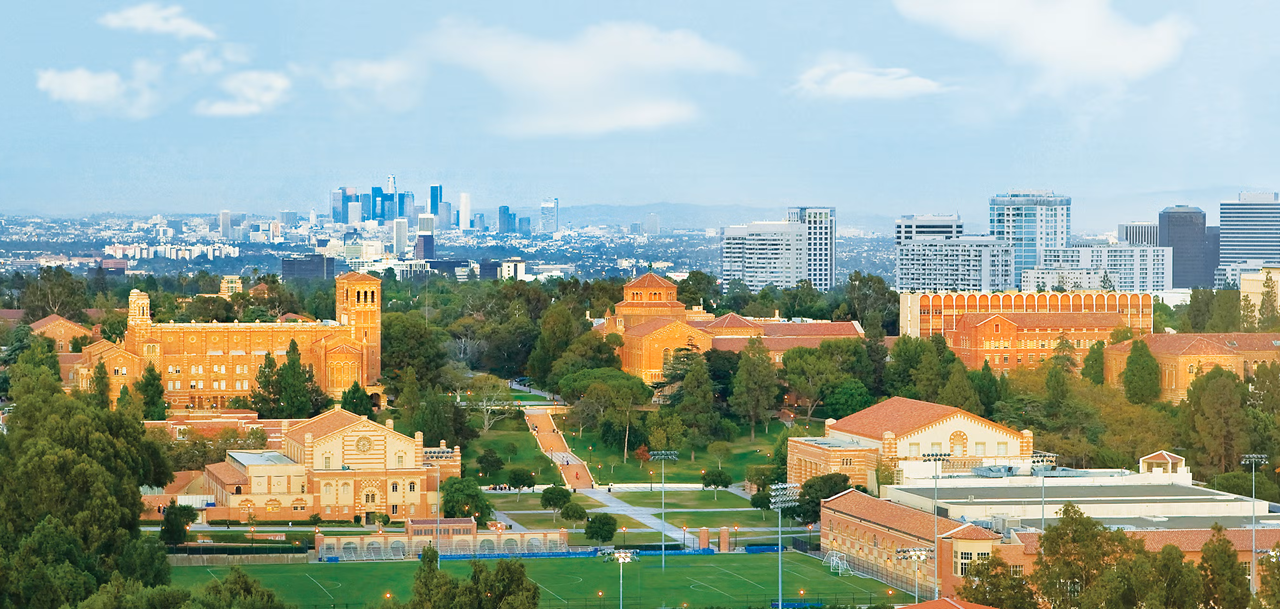
The University of California, Los Angeles (UCLA) is one of the most prestigious public research universities in the world. Founded in 1919, UCLA has grown into a top‑tier institution noted for its academic excellence, diversity, research impact, and cultural prominence. It consistently ranks among the most applied‑to and selective universities in the United States, with deep ties to the city of Los Angeles and global communities.
I. Historical Development
UCLA traces its origins back to the Southern Branch of the University of California, established in 1919 when the normal school (teacher training institution) in Los Angeles was transferred into the UC system to become a comprehensive university.
From those early years—when the campus hosted only a few thousand students—UCLA expanded dramatically throughout the 20th century, adding graduate programs, professional schools (including law, medicine, engineering, and the arts), and research centers. Its growth mirrored that of Los Angeles itself, evolving from a regional institution into a global academic leader.
By the mid‑20th century, UCLA had firmly established a broad academic mission, offering over 300 degree programs and attracting students from across California, the United States, and the world.
II. Current Academic and Institutional Profile
A. Size and Scope
As of Fall 2023, UCLA enrolled approximately 33,040 undergraduate students and 13,636 graduate and professional students, making it one of the largest campuses in the University of California system.
The university is organized into the College of Letters and Science and twelve professional schools, including Engineering, Theater/Film/Television, Medicine, Dentistry, Law, Public Affairs, and Nursing.
B. Reputation and Achievements
UCLA is renowned for both academic and athletic excellence. The university has produced Nobel laureates, MacArthur Fellows, and Rhodes Scholars. Its athletic teams, the Bruins, have won over a hundred NCAA championships and have been represented by Olympians in every U.S. Olympic Games since 1932.
The campus is also internationally recognized for its research, with annual extramural research funding traditionally in the billions, and involvement in cutting‑edge areas such as stem cell research, cancer biology, climate science, and population research.
C. Diversity and Access
UCLA is one of the most applied‑to universities in the United States with an extraordinarily diverse student body. Nearly a third of undergraduates are first‑generation college students, and the campus emphasizes inclusive excellence across racial, ethnic, socioeconomic, and international lines.
The international student population represents over 100 countries, contributing to a global learning environment.
III. Strategic Vision and Initiatives
In 2023, UCLA launched a major strategic planning initiative titled “Creating the Future: UCLA Strategic Plan 2023–28.” The plan identifies five primary goals:
- Deepen engagement with Los Angeles
- Expand global reach
- Enhance research and creative activities
- Elevate teaching and learning
- Become a more effective institution
A major component of this vision, UCLA for Life, reimagines the university’s mission to provide lifelong learning opportunities—extending beyond traditional degrees to professional development, continuing education, and community partnerships.
The strategic plan aims to leverage UCLA’s position within a vibrant megacity and powerful global network to make public impact through community partnership, inclusive excellence, and innovation.
IV. Current and Emerging Challenges
Despite its strengths, UCLA is navigating several significant challenges that reflect broader trends in higher education and unique pressures on flagship public universities.
A. Federal Funding and Civil Rights Scrutiny
In 2025, UCLA faced a major crisis when the federal government suspended or froze hundreds of millions of dollars in federal research grants—sources that support critical life‑science, engineering, and public‑health projects—following civil rights investigations tied to campus climate issues.
These actions stem from allegations that UCLA did not adequately protect Jewish and Israeli students during protests and failed to address civil rights concerns around campus safety and harassment. The situation cost the university hundreds of millions in research funds and created uncertainty around future research capacity and funding stability.
B. Litigation and Admissions Practices
In early 2026, the U.S. Justice Department joined a lawsuit challenging the admissions practices of UCLA’s David Geffen School of Medicine, alleging unlawful use of race preferences. While UCLA maintains compliance with state and federal laws, this legal pressure underscores the complex legal environment around diversity, equity, and admissions policies.
C. Campus Climate and Protests
Violence and governance issues related to the 2024 pro‑Palestinian encampment and counterprotests brought additional scrutiny to UCLA’s campus climate and safety practices. Lawsuits alleging civil rights violations and criticism of university security response have led to national controversy, internal debate, and concerns about campus safety protocols and free expression.
D. Cost and Accessibility
Like many public universities, UCLA faces pressure around tuition costs, cost of living in Los Angeles, and ensuring equitable access for middle‑ and low‑income students. Even though financial aid covers a significant portion of students’ costs and many pay less than full tuition, rising prices and demographic shifts pose long‑term challenges.
E. Enrollment Trends and Demographics
UCLA, together with the broader UC system, has seen shifts in application and enrollment patterns. While applications remain high, demographic realities—such as the national “enrollment cliff” and changes in in‑state vs. out‑of‑state admissions—may impact recruitment strategies and revenue planning.
V. UCLA’s Response and Adaptation
In response to fiscal pressures and operational challenges, UCLA leadership has implemented measures to enhance financial resilience—such as tightening budget controls, limiting certain expenses, and reorganizing administrative functions. Statements from the Chancellor emphasize the need to defend academic freedom while navigating financial and reputational risks.
At the same time, UCLA’s strategic plan and its ongoing initiatives demonstrate a proactive effort to adapt:
- Community engagement and partnerships in Los Angeles
- Expansion of global research collaborations
- Innovation in teaching and lifelong learning curricula
- Strengthening administrative effectiveness
These efforts position UCLA to maintain its academic prominence while aligning its mission with societal needs.
VI. Future Outlook
A. Research and Global Impact
If UCLA can successfully resolve funding disputes and restore research grants, its position as a global research leader remains strong. Its extensive research infrastructure—including biomedical, engineering, arts, and social science institutions—will continue to attract top scholars and research partnerships.
B. Inclusive Excellence and Lifelong Learning
Initiatives like UCLA for Life suggest an expanded future role for the university in workforce development, professional education, and community integration—beyond the traditional undergraduate and graduate degree model.
C. Public Engagement and Urban Integration
Given UCLA’s location in Los Angeles—one of the most diverse and economically dynamic regions in the world—the university’s deepening engagement with the city and its communities can serve as a model for public universities nationally.
D. Strengthening Campus Climate and Governance
Resolving legal and civil rights controversies, improving campus safety policies, and fostering a balanced environment for free expression will be crucial for maintaining trust among students, faculty, and stakeholders.
Conclusion
UCLA stands at a pivotal moment. With a century‑long legacy of academic achievement, research excellence, and cultural significance, the university continues to shape society locally and globally. Yet it faces complex legal, financial, and social challenges that reflect wider societal tensions and the evolving role of public universities.
Through its strategic plan, comprehensive community engagement efforts, and commitment to diversity and innovation, UCLA is actively charting a path toward an inclusive, impactful, and sustainable future. Its ability to navigate federal funding pressures, legal scrutiny, and demographic shifts will influence not only its institutional destiny but also its contribution to higher education broadly.
UCLA’s story—past, present, and future—is a testament to how a public university can strive to balance excellence, equity, and service in a rapidly changing world.